Concrete driveways
Remove general surface build-up and assess tyre marks, organic staining and other contamination. For a dedicated service page, see driveway cleaning Gold Coast.
Cleaning and sealing for suitable outdoor surfaces
Refresh suitable driveways, patios, paths, pool surrounds, pavers and natural stone with a cleaning method selected for the surface and its condition. Where appropriate, sealing can also be considered to reduce absorption and support easier ongoing maintenance.
A practical first step
Outdoor concrete and stone can gradually collect dirt, algae, organic staining, tyre marks and general weathering. Appropriate cleaning can improve presentation and reveal the true condition of the surface.
Not every area should be treated with the same pressure, chemical or equipment. Natural stone, older concrete, exposed aggregate, pavers, painted surfaces and previously sealed areas can respond differently. The surface should therefore be assessed before the cleaning method is selected.
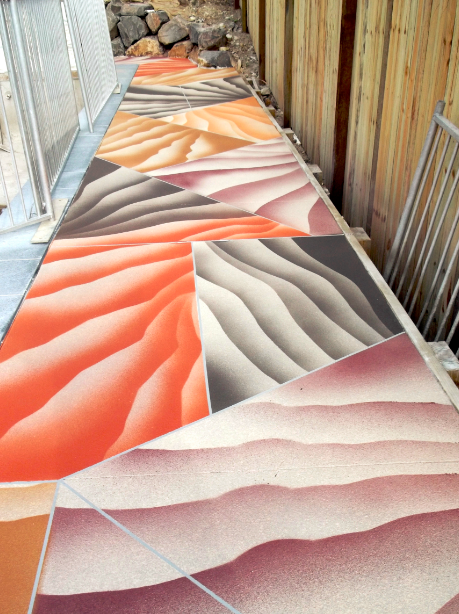
Once clean and dry, Grant can discuss whether the surface is best left as it is, sealed with a compatible product, repaired, or considered for decorative concrete coating or resurfacing.
Surfaces and areas
Suitability depends on the substrate, its condition and any existing coating or treatment.
Remove general surface build-up and assess tyre marks, organic staining and other contamination. For a dedicated service page, see driveway cleaning Gold Coast.
Refresh outdoor living areas while protecting adjoining walls, doors, garden beds and furnishings.
Clean suitable front paths, side access, steps and entry concrete where grime and organic growth affect presentation.
Consider the material, drainage, wet-area use and slip characteristics before cleaning or recommending a sealer.
Use an approach appropriate to the hardness, porosity, jointing and existing treatment of the surface.
Cleaning can be considered for suitable entries, pathways, courtyards and other accessible exterior surfaces.
How the service is approached
The exact method varies, but a careful cleaning and sealing job generally follows these stages.
Identify the surface, existing coatings, staining, weak areas, drainage and nearby items requiring protection.
Clear the work area and protect adjoining finishes, doors, walls, gardens or pool equipment where necessary.
Selected contamination may require an appropriate pre-treatment, dwell time or test area before general cleaning.
Use pressure, equipment and technique matched to the material, then rinse and manage residue appropriately.
Allow the surface to dry sufficiently so its condition and any remaining staining can be assessed accurately.
Where suitable, apply a compatible sealer in accordance with the product and surface requirements.
Optional surface protection
A compatible sealer may help reduce the rate at which a porous surface absorbs water, oils and everyday spills. It can also make routine cleaning easier and may alter the appearance, depending on the selected finish.
Sealing is not automatically suitable for every surface. Existing products, moisture, salt, drainage, porosity, wet-area use and the desired appearance all matter. A test area or further preparation may be required.
The choice should also account for surface texture and slip considerations, particularly around pools, steps and other areas that become wet.
Why have the surface assessed?
Some areas may look considerably better after cleaning alone and may not need decorative resurfacing.
Concrete, exposed aggregate, pavers and natural stone can require different cleaning and sealing approaches.
An inspection helps identify stains or damage that may remain visible despite careful cleaning.
Clear advice about stains and damage
Dark organic build-up and general dirt may respond well, while deeply absorbed oil, rust, tannin, paint, tyre compounds or old coating residue can be more difficult. Previous damage, erosion, exposed aggregate, spalling and cracks also remain part of the underlying surface.
Where cleaning reveals that the concrete is too worn or uneven for the intended appearance, Grant can explain whether repair, sealing, concrete resurfacing or another option may be more appropriate.
Frequently asked questions
No. Results depend on the material, age, porosity, previous treatments and type of contamination. Deep oil, rust, tannin, paint and absorbed staining may improve without disappearing completely.
Yes, if excessive pressure or an unsuitable technique is used. Softer surfaces can be marked, joints can be disturbed and aggregate can be exposed. The method should be selected for the particular material and its condition.
Not necessarily. Some surfaces are best left unsealed, while others may benefit from a compatible product. Existing coatings, moisture, porosity, appearance and how the area is used all need to be considered.
No. A suitable sealer may reduce absorption and support easier maintenance, but it does not make the slab waterproof, maintenance-free or immune to staining, wear, cracking or movement.
Drying time depends on the material, weather, shade, moisture, cleaning process and product requirements. The surface needs to meet the selected sealer’s conditions before application.
There is no fixed interval for every property. Exposure, traffic, drainage, maintenance, surface type and the product previously used all affect when another assessment may be needed.
Local Gold Coast service
Gold Coast Spray Paving services suitable residential and selected commercial properties throughout the region. Call Grant with the suburb, surface type, approximate area and the main issue you would like assessed.
Discuss your surface with Grant
When calling, mention whether the area is concrete, exposed aggregate, pavers or stone; its approximate size; any existing coating; and the stains or presentation issues you are concerned about.